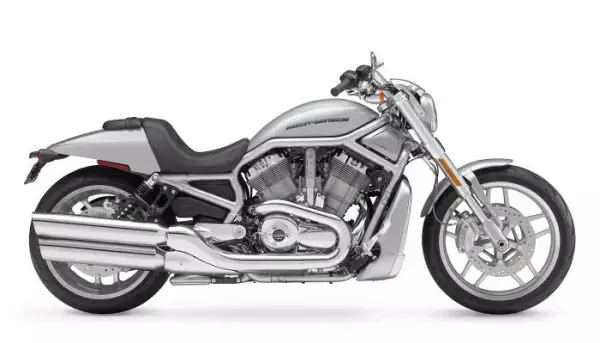
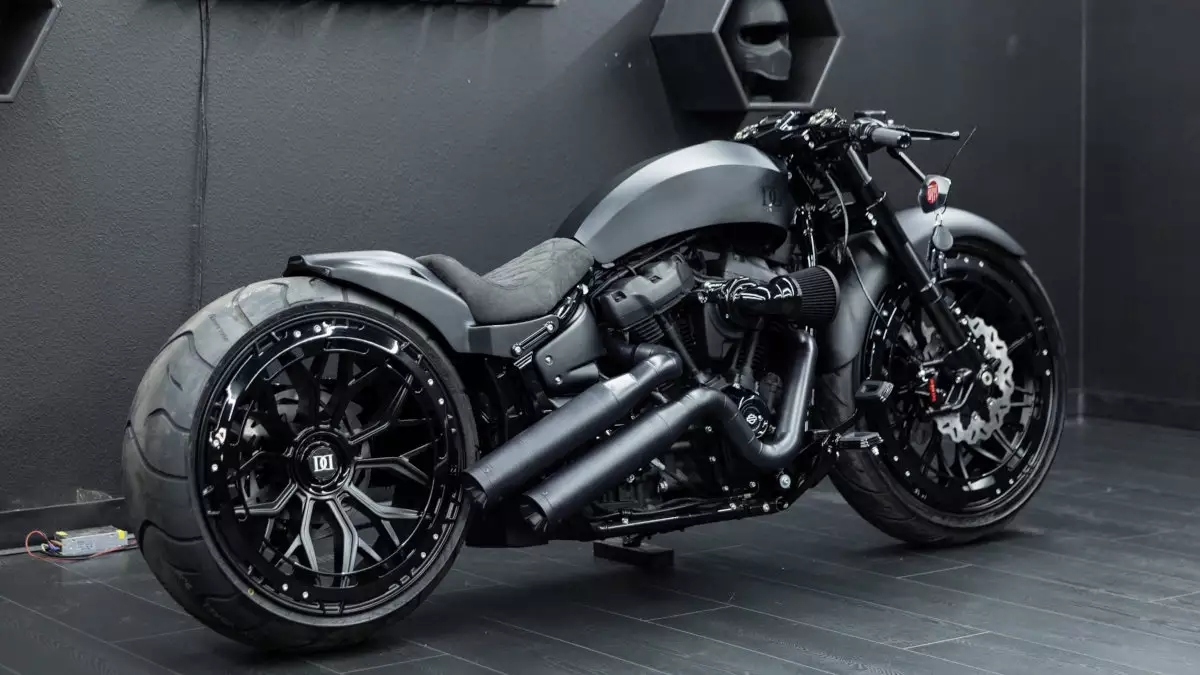
The Harley-Davidson V-Rod didn’t appear out of nowhere. Its creation was the result of a bold vision: to build a performance cruiser that could compete with the modern high-performance motorcycles of the 1990s and 2000s. Harley-Davidson, known for its traditional air-cooled, pushrod V-twins, wanted to innovate while keeping the soul of a Harley.
The Racing Roots: Project VR1000
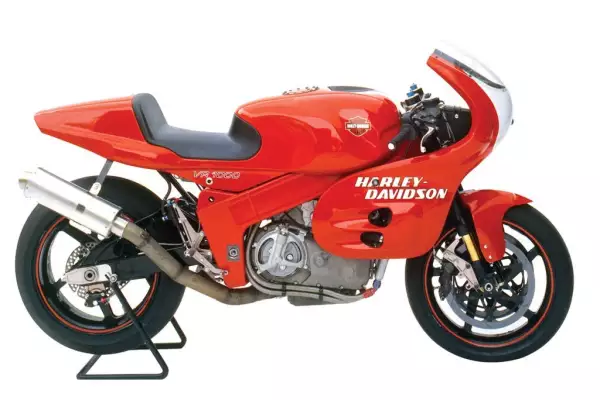
The story begins in the mid-1990s with Harley’s VR1000 project. This program was Harley-Davidson’s first attempt at a modern racing motorcycle to compete in superbike competitions. The lessons learned from VR1000 were revolutionary: it introduced Harley engineers to liquid-cooling, overhead camshafts, and high-revving engines, all technologies that had never been applied in a production Harley before.
Harley-Davidson Project VR1000
Collaboration with Porsche Engineering
Harley realized that creating a high-performance, liquid-cooled V-twin for the street would require expertise beyond their in-house engineering. They partnered with Porsche Engineering to develop the Revolution engine, a 60-degree V-twin with dual overhead cams and four valves per cylinder. This collaboration ensured that the V-Rod would have the reliability, power, and refinement to meet both Harley’s standards and the expectations of a modern performance bike.
The Concept Comes to Life
By 2000, Harley unveiled the V-Rod concept to the public. The design was futuristic, featuring a low, muscular stance, under-seat exhaust, and an aggressive wheelbase that hinted at drag-strip performance. Reaction was mixed: traditional Harley riders were skeptical of the liquid-cooled engine and high-revving design, but younger enthusiasts and custom builders were captivated.
2001 — The Birth of a Revolution
In 2001, Harley-Davidson shocked the motorcycle world with the launch of the V-Rod (VRSCA). Unlike anything Harley had built before, the V-Rod featured the revolutionary Revolution engine, developed in collaboration with Porsche.
Liquid cooling, overhead cams, and high-revving performance marked a radical departure from traditional air-cooled Harleys. The V-Rod was not just a cruiser — it was Harley’s vision of the future.
2006–2012 — The Muscle Cruiser Era
As the V-Rod platform evolved, models like the Night Rod Special and V-Rod Muscle transformed the bike into a true muscle cruiser icon.
This era defined the V-Rod’s identity: long wheelbase, aggressive stance, drag-style design, and unmatched straight-line performance.
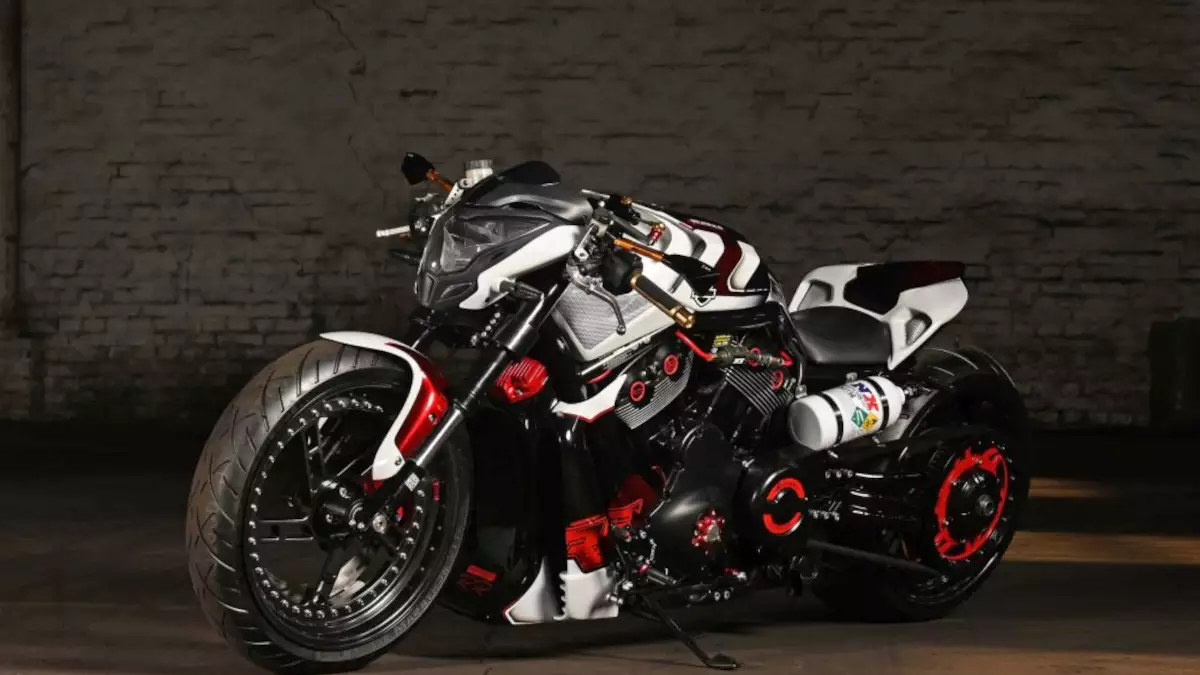
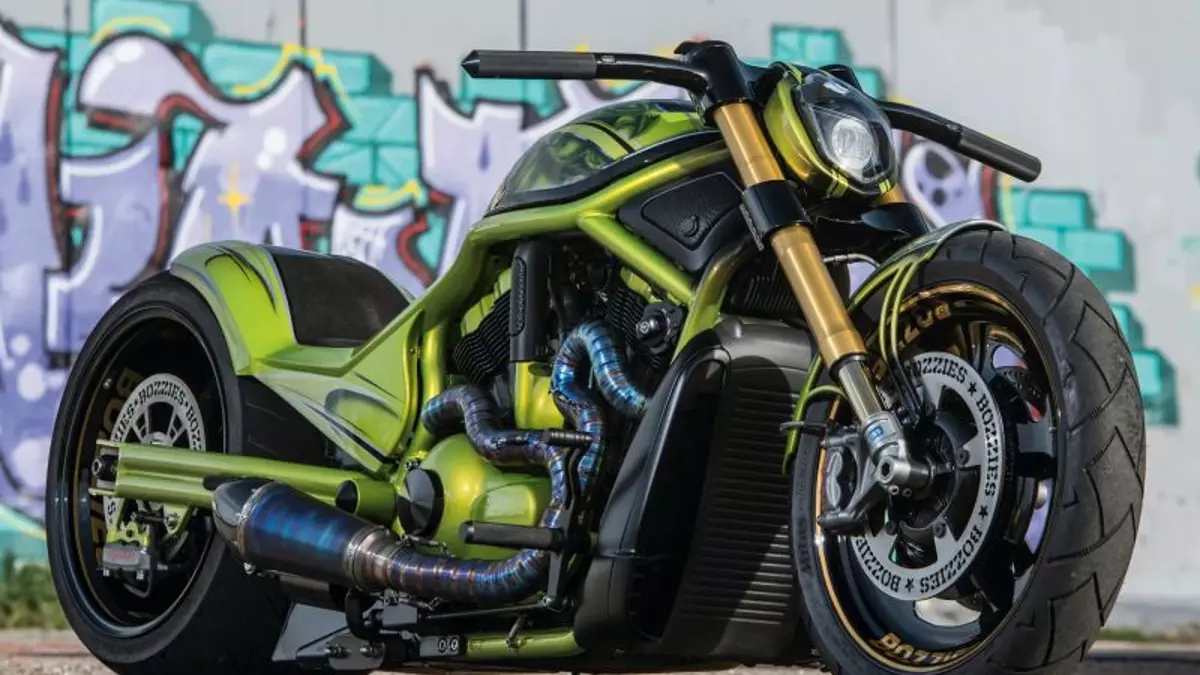
Custom builders worldwide embraced the V-Rod, turning it into one of the most customized Harley platforms ever created.
2013–2017 — The Final Evolution
In its final years, the V-Rod refined its styling and performance, but the market was shifting. Harley-Davidson began focusing on the Softail and Touring platforms, while cruiser trends evolved.
Despite a loyal fan base, sales declined, and the V-Rod slowly became a cult motorcycle rather than a mainstream model.
2017 — The End of Production
In 2017, Harley-Davidson officially ended V-Rod production. The Revolution platform had reached the end of its lifecycle, closing a bold chapter in Harley history.
But for enthusiasts and custom builders, the V-Rod was just getting started.
2002-2007 Birth of the V-Rod – VRSCA
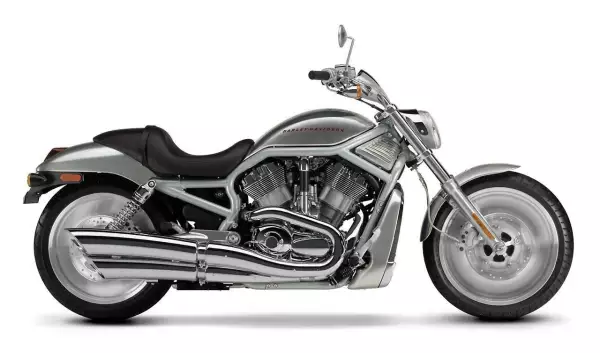
The original V-Rod, the VRSCA, debuted in 2002, introducing the world to Harley’s modern approach. Featuring the 1130 cc liquid-cooled Revolution engine co-developed with Porsche, it was Harley’s first high-performance, high-revving DOHC V-twin. Unlike the traditional pushrod engines, this engine allowed riders to experience power in a way that was previously unheard of for Harley-Davidson.
2002 Harley-Davidson V-Rod
The VRSCA also introduced a unique aluminum frame and swingarm, under-seat exhaust, and digital instrumentation paired with an analog tachometer. Its drag-inspired geometry allowed for a low, aggressive riding position, making it ideal for both cruising and straight-line performance. This combination of performance, style, and innovation immediately made it a favorite among custom builders.
Harley faced criticism from purists who believed the V-Rod was too modern, yet the bike quickly earned a cult following, especially among younger riders and enthusiasts seeking a bike that stood out from the traditional Harley lineup.
2003–2005 V-Rod – VRSCA-B
In 2003, Harley introduced the VRSCA-B, a blacked-out version of the original VRSCA. This model built on the original’s performance but added aesthetic upgrades designed to appeal to riders wanting a more aggressive, darker look. Key features included a blacked-out engine, frame, and components, along with a wider rear tire for enhanced stability and style.
The VRSCA-B set the stage for Harley’s move toward darker, more modern aesthetics. It became a popular platform for customizers, inspiring aftermarket modifications that emphasized performance and aggressive styling.
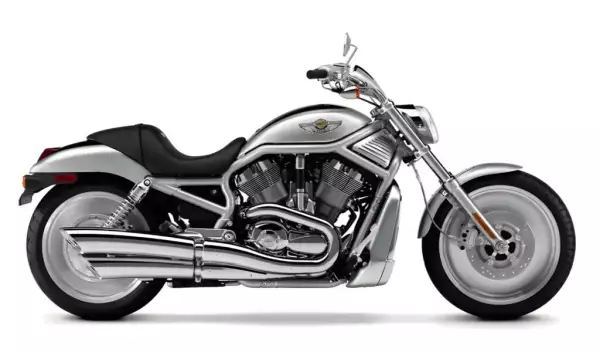
2003 V-Rod 100th anniversary
2003 V-Rod 100th anniversary
In 2003, the V-Rod 100th Anniversary wasn’t just another Harley-Davidson—it was a bold statement of rebellion and evolution. Born from a century of heritage yet driven by futuristic engineering, it roared onto the streets as a symbol of transformation, bridging old-school soul with modern muscle.
Riders who swung a leg over the V-Rod felt history in the metal and innovation in the throttle, as if the past 100 years of Harley spirit were pushing them toward the next hundred. It wasn’t just a bike; it was a milestone on two wheels.
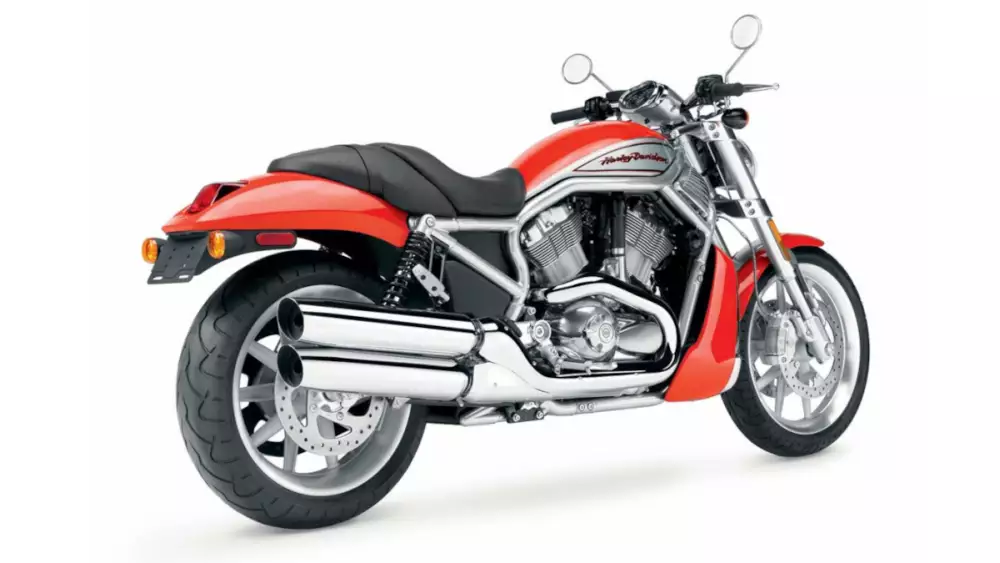
2005 Street RodVRSCR
2005 Street Rod VRSCR
The VRSCR Street Rod was Harley-Davidson’s bold attempt to redefine what a V-Rod could be. Instead of focusing purely on straight-line power and drag-style aesthetics, Harley engineered the Street Rod to deliver a more performance-oriented riding experience, inspired by sport and naked motorcycles.
With a more upright riding position, riders gained better control and visibility, making the bike feel more dynamic and responsive than other V-Rod variants. The ergonomics were designed to appeal to riders who wanted a more aggressive, road-focused stance rather than a laid-back cruiser posture.
2005 Screamin’ Eagle – VRSCSE2
2005 Screamin’ Eagle
The VRSCSE2 Screamin’ Eagle V-Rod, released in 2005, was Harley-Davidson’s ultimate factory performance edition. Produced as a limited-run model, it combined the powerful 1130 cc Revolution engine with premium components and exclusive finishes, creating a true collector’s bike straight from the factory.
With upgraded suspension, high-performance brakes, and unique styling cues, the Screamin’ Eagle V-Rod offered riders a ready-made custom experience without the need for aftermarket modifications. Its rarity and top-tier performance made it highly sought after by enthusiasts, solidifying its place as one of the most prestigious and iconic models in the V-Rod lineup.
2006 Night Rod – VRSCD
2006 Night Rod – VRSCD
The VRSCD Night Rod debuted in 2006, marking the start of the Night Rod era. Harley designed the Night Rod with an even more aggressive stance, darker finishes, and performance-oriented components. With a focus on modern aesthetics and a muscular presence, the Night Rod appealed to riders seeking a Harley that could perform on the drag strip yet still command attention on the street.
The Night Rod’s upgrades included blacked-out finishes, enhanced suspension, and styling that emphasized a sleek, forward-leaning profile. Its combination of power, style, and customizability quickly cemented its status among enthusiasts.
2007-2011 Night Rod Special – VRSCDX
2007-2011 Night Rod Special
In 2007, Harley introduced the VRSCDX Night Rod Special, a premium evolution of the Night Rod. This model featured dual front brakes, inverted front forks, and a high-end suspension system. Every element, from the wheels to the engine finish, was blacked out, giving it a cohesive, aggressive look.
The Night Rod Special represented the peak of V-Rod engineering and design. It combined the high-performance Revolution engine with modern suspension, braking, and ergonomic improvements, creating a Harley that could dominate on the drag strip and perform impressively in everyday riding scenarios.
2009-2017 V-Rod Muscle – VRSCF
2009-2017 V-Rod Muscle
Harley launched the VRSCF V-Rod Muscle in 2009, targeting riders looking for a factory-built muscle bike. The V-Rod Muscle featured a massive 240 mm rear tire, dual side exhaust, muscular tank, and bodywork, combined with a low and aggressive stance. This bike emphasized power, presence, and performance aesthetics, making it a favorite for custom builders and enthusiasts who wanted a Harley ready for street and drag performance.
With its wide rear tire and powerful engine, the V-Rod Muscle became a benchmark for Harley muscle cruisers.
2013 V-Rod 10th Anniversary
2013 V-Rod 10th anniversary
In 2013, the V-Rod 10th Anniversary stood as a tribute to a decade of revolution. What began in 2003 as a radical experiment had become a legend on the streets—a machine that redefined what a Harley-Davidson could be.
With its aggressive stance, liquid-cooled Revolution engine, and futuristic design, the 10th Anniversary V-Rod carried ten years of innovation, controversy, and passion in every detail. Riding it felt like riding the future that Harley once dared to dream, a reminder that tradition only survives when it evolves.
2017: End of Production
After 15 years, Harley discontinued the V-Rod line in 2017. Several factors contributed to this decision, including a strategic shift toward air-cooled heritage models, market trends favoring other cruiser types, and the introduction of the Milwaukee-Eight engine platform.
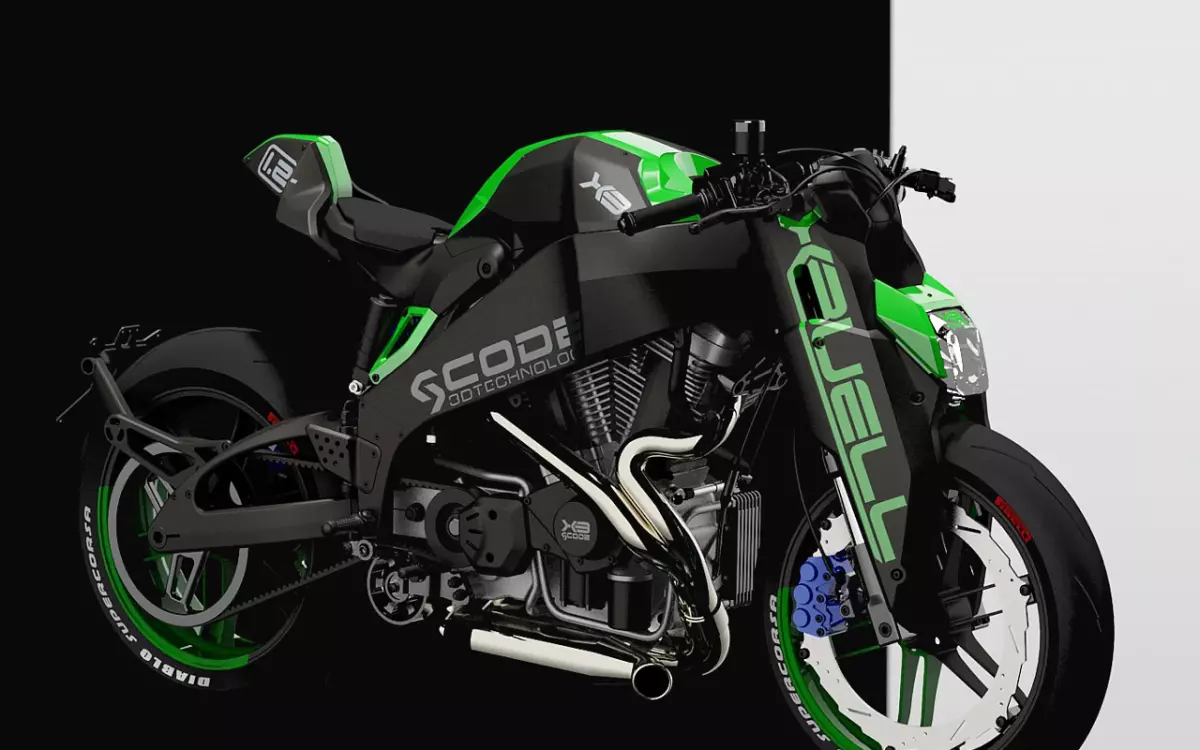
Despite its discontinuation, the V-Rod’s influence continued to grow. Builders around the world used it as a base for drag bikes, muscle cruisers, show bikes, and custom creations. Its unique combination of modern engineering and Harley heritage ensured its place as a collector’s bike and custom icon.